How many Amazon Leo satellites are in orbit? Launch tracker and running total
Amazon Leo has 432 satellites deployed after 16 missions, 40 lost on Vulcan. Mission-by-mission tracker, rockets, FCC deadlines and service timing.
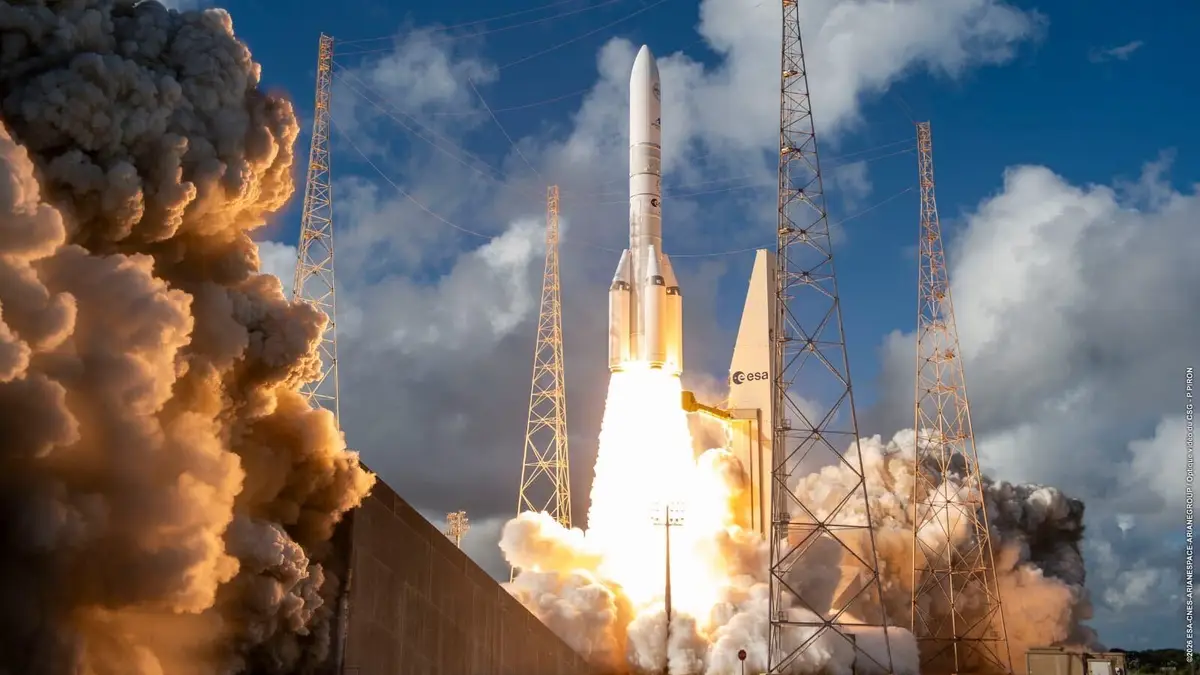
Amazon has put 432 Amazon Leo production satellites into orbit as of 27 November 2026. That's our count from Amazon's own mission log: 472 satellites launched on 16 missions, minus the 40 lost when ULA's Vulcan rocket failed on 15 November. Amazon itself says "more than 400" and calls Leo "the third-largest constellation in orbit." It's still only about 13% of the 3,232 satellites in Amazon's first-generation plan.
Below you'll find a mission-by-mission tracker with running totals, how fast Amazon is launching, what the FCC deadlines mean, and when service could start. We'll keep it updated as new launches happen.
How many Amazon Leo satellites are in orbit right now?
Here are the numbers, taken from Amazon's official mission updates page (last updated 24 November 2026):
| Metric | Figure | Source |
|---|---|---|
| Production missions flown | 16 | Amazon mission log |
| Satellites launched | 472 | Our sum of Amazon's per-mission figures |
| Satellites lost at launch | 40 (LV-01, Vulcan, 15 Nov 2026) | Amazon |
| Satellites deployed to orbit | 432 | Our calculation; Amazon says "more than 400" |
| First-generation constellation size | 3,232 | Amazon's FCC filing, as reported by GeekWire and PCMag |
| Share of Gen 1 deployed | about 13.4% | Our calculation |
Two caveats. First, "deployed" means the rocket released the satellites in orbit. It isn't the same as "operational." Each new batch is released at about 465 km and then uses its own propulsion to climb to its working altitude of 630 km, which takes time. Amazon doesn't publish how many satellites are fully commissioned, and it doesn't publish a count of failed or deorbited satellites, so we can't give one. Second, the two prototypes Amazon launched in October 2023 (KuiperSat-1 and KuiperSat-2) aren't counted. According to Wikipedia's Amazon Leo entry, both were later deorbited.
You'll also see 3,236 in some places. That was the figure in the FCC's original 2020 authorization, according to Wikipedia. Amazon's 2026 filings and press coverage use 3,232, so we use that.
Amazon Leo launch tracker: every mission so far
This is the table we couldn't find anywhere else: every production mission with a running total. Dates and satellite counts come from Amazon's mission log. Running totals are our arithmetic.
| # | Mission | Rocket | Date (as Amazon lists it) | Satellites | Running total in orbit |
|---|---|---|---|---|---|
| 1 | KA-01 | Atlas V 551 | 28 Apr 2025 | 27 | 27 |
| 2 | KA-02 | Atlas V 551 | 23 Jun 2025 | 27 | 54 |
| 3 | KF-01 | Falcon 9 | 16 Jul 2025 | 24 | 78 |
| 4 | KF-02 | Falcon 9 | 11 Aug 2025 | 24 | 102 |
| 5 | KA-03 | Atlas V 551 | 25 Sep 2025 | 27 | 129 |
| 6 | KF-03 | Falcon 9 | 13 Oct 2025 | 24 | 153 |
| 7 | LA-04 | Atlas V 551 | 16 Dec 2025 | 27 | 180 |
| 8 | LE-01 | Ariane 64 | 12 Feb 2026 | 32 | 212 |
| 9 | LA-05 | Atlas V 551 | 4 Apr 2026 | 29 | 241 |
| 10 | LA-06 | Atlas V 551 | 27 Apr 2026 | 29 | 270 |
| 11 | LE-02 | Ariane 64 | 30 Apr 2026 | 32 | 302 |
| 12 | LA-07 | Atlas V 551 | 29 May 2026 | 29 | 331 |
| 13 | LE-03 | Ariane 64 | 17 Jun 2026 | 36 | 367 |
| 14 | LA-08 | Atlas V 551 | 2 Jul 2026 | 29 | 396 |
| 15 | LV-01 | Vulcan VC6L | 15 Nov 2026 | 40 (lost) | 396 |
| 16 | LE-04 | Ariane 64 | 24 Nov 2026 | 36 | 432 |
Dates are in US Eastern time for Florida launches and UTC for Kourou launches, as Amazon lists them. Missions before 13 November 2025 use the old "Kuiper" names (KA, KF). Amazon renamed Project Kuiper to Amazon Leo that day.
Our 396 figure after LA-08 matches the "396 production satellites as of July 2026" that Wikipedia reports, which is a useful cross-check.
Which rockets launch Amazon Leo satellites?
By provider, using the same mission log:
| Provider | Rocket | Missions flown | Satellites deployed |
|---|---|---|---|
| United Launch Alliance | Atlas V 551 | 8 | 224 |
| Arianespace | Ariane 64 | 4 | 136 |
| SpaceX | Falcon 9 | 3 | 72 |
| United Launch Alliance | Vulcan VC6L | 1 | 0 (40 lost) |
| Blue Origin | New Glenn | 0 | 0 |
Arianespace has now flown all four of its 2026 Leo missions without a problem, and the 136 figure matches what Arianespace CEO David Cavaillolès said after LE-04: "Having now placed 136 Amazon Leo satellites into orbit this year, Arianespace has reached another milestone," according to ArianeGroup. Amazon said on 24 November that it has booked 24 Ariane 6 launches in total, after adding six more in September. Overall, Amazon says its launch manifest "includes more than 100 missions."
What happened on the latest launch, LE-04?
LE-04 lifted off on an Ariane 6 (in its four-booster Ariane 64 setup) from Kourou, French Guiana, at 11:14 UTC on Tuesday 24 November 2026. It had been planned for 23 November. Arianespace postponed it by a day "following the technical event that occurred on November 23 affecting the launcher's ground support systems." Arianespace calls the flight VA271. It was Ariane 6's tenth flight.
ArianeGroup says the last satellites separated 2 hours and 4 minutes after liftoff, at about 460 km. Amazon gives about 465 km. Amazon's team in Redmond, Washington then took control. We previewed this launch in our LE-04 launch-time guide, which now carries the result.
It mattered because it came nine days after the Vulcan failure that destroyed 40 Leo satellites. Amazon's statement on that failure: "There is risk with any launch, and that's especially true for inaugural missions like LV-01."
How many Amazon Leo satellites are planned?
Amazon's first-generation system is 3,232 satellites in low Earth orbit. The FCC set two milestones: half the constellation by 30 July 2026, and all of it by 30 July 2029.
Amazon didn't make the first one. In January 2026 it asked for two more years, citing "a shortage in the near-term availability of launches," GeekWire reported. At the time it expected about 700 satellites in orbit by July 2026. The real number on 30 July was 396.
On 5 June 2026 the FCC waived the July 2026 milestone instead of moving it, according to PCMag. The catch is that satellites launched after 30 July 2026 temporarily lose "priority status," so they must show they can coexist with systems such as Starlink. Amazon gets that priority back when it reaches 50% of the constellation, or by 30 March 2028 at the latest. That date can move up to 30 October 2027 if Amazon certifies that the satellites for the 50% milestone are built and their launches are booked. The 2029 deadline for the full system hasn't changed.
How fast is Amazon launching, and can it hit 3,232?
These are our estimates, based on Amazon's log:
| Period | Missions | Satellites deployed |
|---|---|---|
| 2025 (Apr–Dec) | 7 | 180 |
| 2026 so far (to 27 Nov) | 9 (1 failed) | 252 |
| Needed for 50% (1,616) | — | about 1,184 more |
| Needed for full Gen 1 by 30 Jul 2029 | — | about 2,800 more |
Getting 2,800 satellites up in roughly 32 months works out to about 87 a month. Amazon's best year so far averages about 23 a month. Closing that gap depends on heavier rockets (Vulcan and New Glenn) flying regularly. Neither has yet delivered a Leo satellite to orbit. Amazon also says it runs "one of the largest, most advanced satellite production lines on the planet," so the satellites themselves aren't the stated bottleneck. Launches are.
When will Amazon Leo service start?
Amazon's mission page says only that once the new satellites reach 630 km they will be commissioned "to begin delivering service to customers," and that the team "prepares to roll out service to customers around the world." It gives no public commercial launch date. Wikipedia says early service was "anticipated in 2026" when the program was renamed. For pricing, speeds and country plans, see our Amazon Leo launch date, price and speeds vs Starlink guide. For the basics, start with what Amazon Leo is.
What are people saying?
We looked for community discussion of the latest totals and didn't find attributable posts we could link to, so we aren't quoting anyone. Search data shows what people want to know. The most common questions are "how many Amazon Leo satellites are in orbit," "how many have been launched," "how many are planned," "Amazon Leo satellites vs Starlink," and "Amazon Leo satellites destroyed." This page answers each of them.
Editor's take
The headline number (432) is real progress. A year ago Amazon had 153 satellites up, and it has nearly tripled that since. But the gap to the target is far larger than the progress. On today's pace Amazon would be well short of 3,232 by mid-2029. The first Vulcan flight for Leo, which could have been the biggest single batch yet, ended in a loss. What to watch in the next few months is whether Vulcan returns to flight and New Glenn starts carrying Leo satellites. Ariane 6 has delivered all four of its Leo missions, but at about 36 satellites per flight it can't close the gap alone. Watch for a service launch date too. That will matter more to customers than any satellite count.
FAQ
How many Amazon Leo satellites are in orbit?
By our count of Amazon's mission log, 432 production satellites have been deployed as of 27 November 2026. Amazon says "more than 400." Amazon doesn't publish how many are fully operational.
How many Amazon Leo satellites have been launched?
472 across 16 missions. 40 of them were lost when ULA's Vulcan failed on 15 November 2026, which leaves 432 deployed.
How many Amazon Leo satellites are planned?
3,232 in the first-generation system, per Amazon's FCC filings. The original 2020 FCC authorization listed 3,236.
How many Amazon Leo satellites were destroyed?
40, on the LV-01 Vulcan mission on 15 November 2026. Amazon has reported no other launch failures. The two 2023 prototypes were deliberately deorbited.
How many Amazon Leo satellites vs Starlink?
Amazon describes Leo as "the third-largest constellation in orbit." SpaceX's Starlink is far larger. We haven't included a Starlink count because we couldn't verify a current official figure.
When is the next Amazon Leo launch?
Amazon hadn't listed the next mission on its updates page as of 27 November 2026. We'll add it to this tracker when it's announced.
What altitude do Amazon Leo satellites fly at?
They're released at about 460–465 km and then raise themselves to their operational altitude of 630 km (392 miles), according to Amazon.
Did Amazon miss the FCC deadline?
Yes. Amazon didn't have half of the constellation up by 30 July 2026. The FCC waived that milestone in June 2026, on the condition that satellites launched after the deadline temporarily lose priority status. The 30 July 2029 deadline for the full constellation still applies.
More from 9to5Amazon today: AWS Nitro Isolation Engine explained.
Sources
- Amazon: Amazon Leo mission updates
- Amazon: How Amazon Leo's satellites launch with help from 13 European countries
- Arianespace: Mission VA271/LE-04 rescheduled for November 24, 2026
- ArianeGroup: Ariane 6 transports another 36 Amazon Leo satellites into orbit on its 10th flight
- CNES: VA269 success (LE-03)
- GeekWire: Amazon asks FCC for 2-year extension
- PCMag via Yahoo: FCC gives Amazon Leo a reprieve on satellite launch deadline
- Wikipedia: Amazon Leo
Featured image: Ariane 6 lifts off from Kourou, French Guiana, on Amazon Leo's LE-04 mission, 24 November 2026. Photo © 2026 ESA-CNES-Arianespace-ArianeGroup / Optique vidéo du CSG – P. Piron, via Amazon. Source