AWS Graviton5 Is Now Generally Available: Specs, Instances, Price and Graviton vs Intel
AWS Graviton5 is GA on EC2 M9g and M9gd. Specs, regions, AWS's 25% claim vs Phoronix tests, Graviton vs Intel and AMD, and a should-you-migrate table.
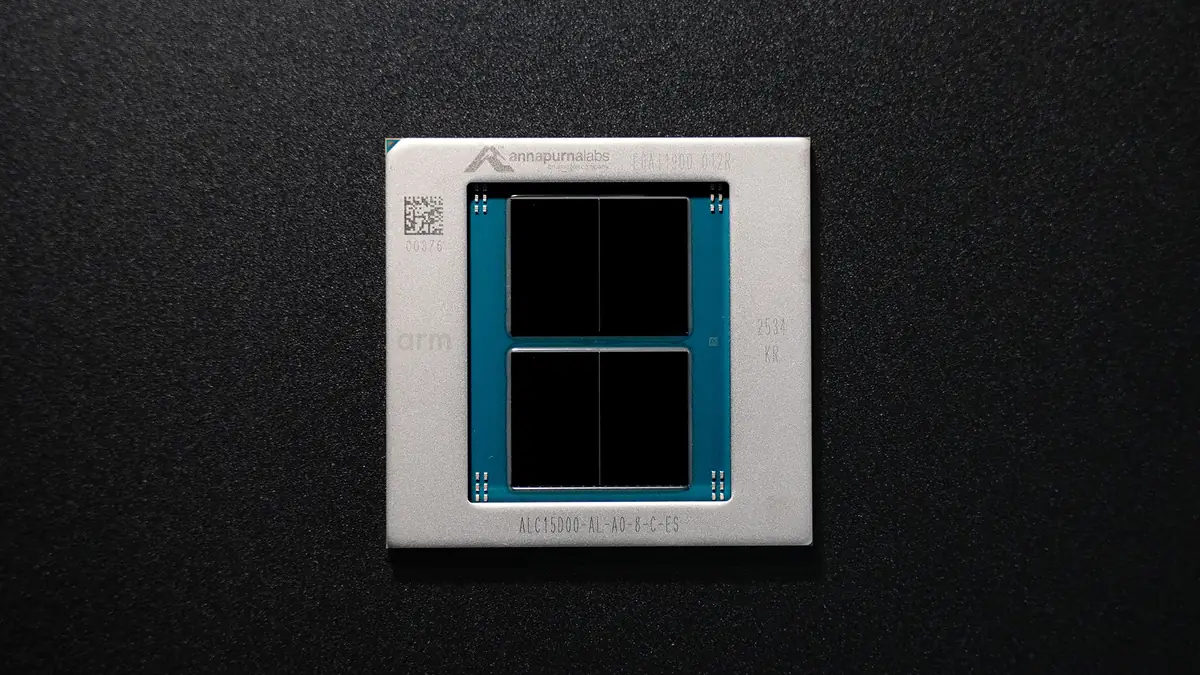
Short answer: Yes. AWS Graviton5 is generally available, and you can launch it today as the Amazon EC2 M9g (general purpose) and M9gd (general purpose with local NVMe SSD) instance families. AWS made it GA on 10 June 2026, six months after a preview at re:Invent in December 2025. On 3 September 2026 AWS added four more regions: Europe (Ireland), Asia Pacific (Singapore), Asia Pacific (Sydney) and Asia Pacific (Tokyo).
AWS's headline claim is up to 25% better performance than Graviton4-based M8g/M8gd instances. The one big independent review we found, from Phoronix, roughly agrees. It also found that Graviton5 beats Intel's newest Xeon on most tests but trails AMD's EPYC "Turin".
So why write this up in late October? Graviton5 is in the news again. Amazon's newsroom is pushing its line, "purpose-built performance for the agentic AI era", and with re:Invent 2026 a few weeks away, many teams are deciding whether to move to it before budgets lock. This guide is for them.
New to the basics? Start with our explainer What is AWS? and come back.
What is AWS Graviton5?
Graviton is Amazon's own family of Arm-based server CPUs, designed by Annapurna Labs (an Amazon company). Graviton5 is the fifth generation. It runs only inside AWS, so you can't buy the chip itself. You rent it by the hour as an EC2 instance, or indirectly through managed services such as Amazon RDS.
Here's what Amazon says about the chip. All of these are AWS claims, from Amazon's newsroom post and the What's New announcements:
| Spec | Graviton5 (AWS claim) |
|---|---|
| Cores per chip | 192 |
| Process | 3nm |
| L3 cache | 5x larger than Graviton4; 2.6x more L3 per core |
| Memory | DDR5-8800 |
| Inter-core latency | Up to 33% lower |
| Network bandwidth | Up to 15% higher on average, up to 2x on the largest sizes |
| EBS bandwidth | Up to 20% higher on average |
| Security | First instances with the "Nitro Isolation Engine" (formally verified isolation) |
AWS Graviton5 instance types: M9g and M9gd
Right now, Graviton5 is offered in these families:
- M9g: general purpose, EBS-only storage. The default choice for web apps, microservices, app servers and mid-sized databases.
- M9gd: the same, plus local NVMe SSD. AWS says up to 11.4 TB of local storage and 30% higher IOPS than the previous generation. Good for caches, scratch space and build machines.
- Amazon RDS db.m9g: AWS added M9g database instances for RDS for PostgreSQL, MySQL and MariaDB in June 2026 (initially 24xlarge and 48xlarge sizes in N. Virginia, Ohio, Oregon and Frankfurt, per the AWS announcement).
We have not seen compute-optimised (C9g) or memory-optimised (R9g) Graviton5 families announced as of 24 October. If they come, re:Invent is the usual place.
You can buy M9g/M9gd On-Demand, as Spot, through Savings Plans, or as Dedicated Instances and Dedicated Hosts.
Which regions have Graviton5?
AWS's 3 September announcement lists the four regions added that day: Ireland, Singapore, Sydney and Tokyo. It doesn't repeat the full list. The launch-day regions were in the US, and RDS lists N. Virginia, Ohio, Oregon and Frankfurt. To be sure for your account, check the EC2 console's instance-type picker or run aws ec2 describe-instance-type-offerings for your region. Don't rely on a blog's list, including ours.
How much faster is Graviton5 than Graviton4?
What AWS claims:
- Up to 25% better compute performance than Graviton4 (M8g).
- 35% faster web applications, 35% faster ML inference, 30% faster databases.
What AWS's launch customers reported (their tests, published by Amazon):
- Airbnb: up to 20% over Graviton4 in production search tests.
- Atlassian: 30% higher Jira performance and 20% lower latency versus the prior generation.
- SAP: 35% to 60% higher OLTP query performance on SAP HANA Cloud.
- Synopsys: up to 35% faster runtimes in Fusion Compiler and PrimeTime.
What an independent tester found: in a review published in July 2026, Phoronix reported about a 30% geometric-mean improvement of Graviton5 over Graviton4 across its benchmark suite. That's slightly better than AWS's own "up to 25%" figure. Phoronix also reported much faster compile times, at what it calculated as about a 9% higher on-demand price.
AWS Graviton vs Intel (and AMD): who wins?
This is the most-searched question, and the honest answer is: it depends on the workload, and AMD complicates the story.
Phoronix ran 16-vCPU, 64 GB instances side by side on Ubuntu 26.04: m9g.4xlarge (Graviton5), m8i.4xlarge (Intel Xeon 6 "Granite Rapids") and m8a.4xlarge (AMD EPYC "Turin"). Its findings, as reported:
| Graviton5 (m9g.4xlarge) | Graviton4 (m8g) | Intel Xeon 6 (m8i.4xlarge) | AMD EPYC Turin (m8a.4xlarge) | |
|---|---|---|---|---|
| Architecture | Arm Neoverse V3 | Arm Neoverse V2 | x86 | x86 (Zen 5) |
| On-demand price in Phoronix's test | ~$0.78/hr | ~9% cheaper than G5 | ~$0.85/hr | ~$0.97/hr |
| Overall performance (Phoronix) | ~30% ahead of Graviton4 | Baseline | Behind Graviton5 on most tests | Ahead of Graviton5 on most tests |
| Where it shines | Memory-bound work (DDR5-8800), some ML inference (NCNN) | — | — | Raw per-core CPU work: nginx, GROMACS, encoding |
Prices are the hourly on-demand figures Phoronix reported for its test region. Check the EC2 pricing page for your own region before deciding anything.
Editor's opinion: The table points to the real story, which is price-performance rather than peak speed. AMD Turin wins many raw benchmarks but costs roughly a quarter more per hour in that test. Intel costs more than Graviton5 and, per Phoronix, is slower on most tests. For most stateless web and API work that already builds for Arm, Graviton5 looks like the sensible default. For CPU-heavy work that's bound by single-thread speed, benchmark Turin before you commit.
How much does Graviton5 cost?
AWS doesn't put prices in its announcements; they're on the EC2 pricing pages and vary by region and purchase option. The data point above (about $0.78/hour for m9g.4xlarge on demand, per Phoronix) gives you a sense of scale. Savings Plans and Spot can cut that a lot.
If you're just experimenting, remember that Graviton isn't automatically free. Read our AWS Free Tier 2026 guide before spinning up a 4xlarge "just to try it".
Should you migrate to Graviton5? A decision table
This is our editorial guide. It doesn't replace your own benchmarks.
| Your situation | Our take | Why |
|---|---|---|
| Already on Graviton4 (M8g), containerised, multi-arch images | Migrate soon | It's mostly an instance-type change. AWS claims up to 25%, Phoronix measured ~30% for a modest price bump. |
| On Graviton2/3, Java, Go, Node.js or Python services | Yes, plan it | Same Arm architecture, bigger generational gap |
| On Intel x86 with interpreted or JVM languages | Pilot first | Usually ports with little effort; test native dependencies |
| On x86 with closed-source binaries or x86-only libraries | Wait | No Arm build means no migration |
| Heavy single-thread CPU work (encoding, some HPC) | Benchmark AMD Turin too | Phoronix found Turin ahead on raw core performance |
| Memory-bandwidth-bound work (in-memory DBs, analytics) | Strong candidate | DDR5-8800 and the 5x L3 cache are Graviton5's strongest points |
| Need local NVMe (caches, CI runners) | Look at M9gd | Up to 11.4 TB local SSD (AWS claim) |
| Region not yet supported | Wait / stay on M8g | Check availability first |
| Running managed DBs on RDS | Test db.m9g | Low-effort switch if your engine and region are supported |
What are developers saying?
We looked for discussion of Graviton5 specifically on r/aws and Hacker News and didn't find a thread we could confidently quote with attribution, so we're not quoting anyone. Instead, here are the questions our readers keep asking:
- Do Graviton5 Spot prices hold up, or does demand push them up like the early Graviton4 days?
- Will there be C9g and R9g families, and when?
- How does Graviton5 compare with AMD instances once Savings Plans discounts are applied?
- Is AWS steering its own AI inference and agent workloads onto Graviton5 to free up GPUs (see our Trainium/TorchNeuron explainer)?
If you have numbers from production, we'd like to hear them.
Why Amazon keeps building its own chips
Graviton sits next to Trainium (AI training) and Inferentia (inference) as Amazon's push to rely less on Intel, AMD and Nvidia and to keep more of the margin itself. It also matters for capacity planning at Amazon's scale. Our Prime Day 2026 piece shows the load AWS handles, and the energy side of that buildout is covered in our nuclear reactors story. Investors will hear about AWS capex and custom silicon again at Amazon's Q3 2026 earnings on 29 October. And if you're wondering why the stock has been falling despite all this, see Why is Amazon stock down?
FAQ
Is AWS Graviton5 generally available?
Yes. AWS made Graviton5-based EC2 M9g and M9gd instances generally available on 10 June 2026, after a December 2025 preview.
What instance types use Graviton5?
EC2 M9g (general purpose) and M9gd (general purpose with local NVMe SSD), plus RDS db.m9g database instances. No C9g or R9g families had been announced as of 24 October 2026.
How much faster is Graviton5 than Graviton4?
AWS claims up to 25%. Phoronix's independent testing reported roughly a 30% geometric-mean gain across its suite.
Is Graviton faster than Intel?
In Phoronix's 16-vCPU comparison, Graviton5 beat Intel's Xeon 6 (m8i) on most tests and cost less per hour. AMD EPYC Turin (m8a) was faster on most raw CPU tests but more expensive.
Which regions support Graviton5?
On 3 September 2026 AWS added Ireland, Singapore, Sydney and Tokyo to the launch regions. Check the EC2 console for the current list in your account.
Do I need to recompile my code for Graviton?
Interpreted and JVM languages usually run unchanged. Compiled code and container images need Arm64 (aarch64) builds. Anything with x86-only binaries won't run.
How many cores does Graviton5 have?
AWS says 192 cores per chip, built on a 3nm process.
Is Graviton5 good for AI?
AWS claims 35% faster ML inference than Graviton4. It's a CPU, though, not a GPU or Trainium replacement. It suits light inference and the "glue" work around AI agents.
Sources
- Amazon News: AWS Graviton5 is now generally available
- AWS What's New: Amazon EC2 M9g and M9gd instances now available in four additional regions (3 September 2026)
- AWS What's New: M9g and M9gd generally available (10 June 2026)
- AWS What's New: Amazon RDS supports M9g database instances
- AWS What's New: M9g preview announcement (December 2025)
- Phoronix: Graviton5 CPU Benchmarks: 30% Geo Mean Improvement Over Graviton4
- Phoronix: Graviton5 Outperforming Intel Xeon Granite Rapids But Falls Short Of AMD EPYC Turin
- AWS: EC2 On-Demand pricing
Featured image: AWS Graviton5 processor. Amazon. Source