Amazon to Fund 12 Small Nuclear Reactors in Indiana: What It Means for AWS and AI
Amazon will fund 12 X-energy Xe-100 small modular reactors (960 MW) at an old Indiana coal site. Timeline, cost, critics and the AI angle.
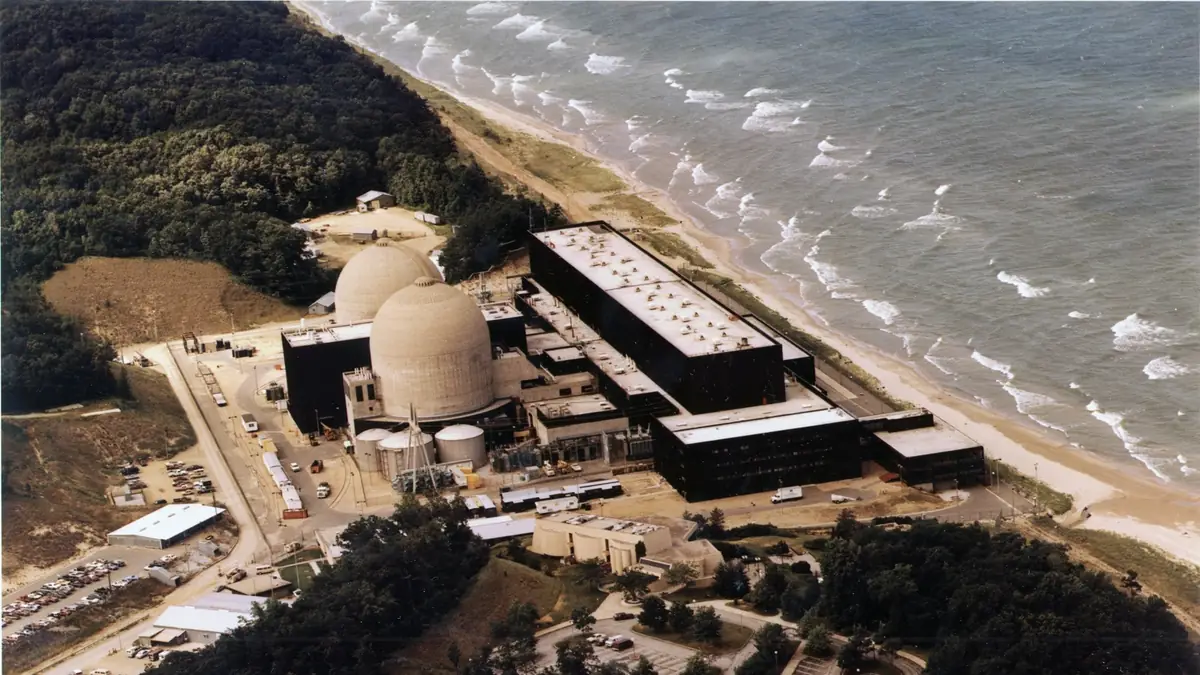
Amazon is paying to develop a nuclear power plant in Indiana. The plan, announced on Monday 19 October 2026, is for 12 X-energy Xe-100 small modular reactors producing 960 megawatts on the site of the retired Breed coal plant in Sullivan County, south of Terre Haute. American Electric Power (AEP) would run it. Amazon would be the first customer for the electricity, which goes into the public grid and helps power its data centres.
That's the headline. The fine print matters more: this is a joint development agreement to study feasibility. No construction date, no budget, no final investment decision. X-energy has not yet finished building its first reactor anywhere.
So read this as Amazon placing a long bet on where its future power comes from, not as a plant that's about to break ground.
What exactly did Amazon announce in Indiana?
According to Amazon's own announcement and World Nuclear News, the three companies have agreed to explore building an X-energy plant in AEP's Indiana territory. Here's what's confirmed:
| Detail | What's been announced |
|---|---|
| Reactors | 12 × X-energy Xe-100, 80 MW each |
| Total capacity | 960 MW ("nearly 1 gigawatt") |
| Layout | Three groups of four reactors |
| Site | Former Breed Generating Station (coal), Sullivan County, Indiana |
| Operator | AEP, via its Indiana Michigan Power utility |
| Amazon's role | Funds development; first power buyer under a long-term deal |
| Where the power goes | The regional grid, plus Amazon data centres |
| Jobs (if built) | ~1,000 construction, 100+ permanent |
| Cost | Not disclosed |
| Start date | Not disclosed; no final investment decision |
AEP CEO Bill Fehrman said, per World Nuclear News, that advanced nuclear "has the potential to provide dependable power for over half a century." Amazon's Josh Weissman, who leads data centre capacity delivery, said the aim is "nearly a gigawatt of carbon-free power for the regional grid," and that Amazon intends to pay its full costs rather than pass them on.
One detail worth noticing: Sullivan County recently joined Indiana's Advanced Nuclear Ready Communities Program, per WNN. The local groundwork is already being laid.
What is a small modular reactor, in plain English?
A traditional nuclear plant is a giant one-off construction project. Each one is built on-site, more or less from scratch, and the recent US examples ran far over budget and years late.
A small modular reactor (SMR) flips that. Each unit is much smaller, and the idea is to build them like products in a factory, ship them, and stack several together. Need more power? Add more modules.
X-energy's Xe-100 has a few features that set it apart from the reactors most people picture:
- 80 MW per unit. A big conventional reactor is often over 1,000 MW.
- Helium, not water, as coolant. It's a high-temperature gas-cooled reactor.
- TRISO fuel. Tiny uranium kernels wrapped in layers of ceramic and carbon, packed into pebbles. Amazon quotes the US Department of Energy calling it the "most robust nuclear fuel on Earth."
- Designed not to melt down. X-energy says the core can't melt without active cooling or operator action, per Interesting Engineering.
- Flexible cooling. Air, water or hybrid cooling options, which matters in drier regions.
The fuel side is moving too. X-energy's TRISO-X subsidiary received a 40-year fuel-manufacturing licence from the US Nuclear Regulatory Commission earlier this year, according to WNN.
How does this tie to Amazon's earlier X-energy deals?
This isn't a one-off. It's the second site in a plan Amazon and X-energy announced in October 2024: more than 5 GW of new US nuclear capacity by 2039.
| Year | Deal | What it is |
|---|---|---|
| 2024 | X-energy Series C-1 | Amazon led a round that closed at $700 million, funding reactor design, licensing and a fuel plant in Oak Ridge, Tennessee |
| 2024 | Cascade Advanced Energy Facility | With Energy Northwest, near Richland, Washington; also up to 12 Xe-100s / 960 MW |
| 2026 | Indiana (Breed site) | With AEP; 12 Xe-100s / 960 MW |
Amazon's relationship with X-energy began through its $2 billion Climate Pledge Fund. Amazon also says it has more than 700 carbon-free energy projects worldwide totalling over 40 GW, and separately it has a deal with Constellation tied to the Calvert Cliffs plant in Maryland.
Two Indiana-sized projects get Amazon to about 1.9 GW. That's still well short of 5 GW, so expect more sites.
When will the Indiana reactors actually produce power?
Honestly, nobody has said. And the timeline depends on something that hasn't happened yet.
X-energy's first plant is planned at Dow's Seadrift chemical site in Texas. Per Trending Topics, construction there hasn't started, the NRC construction permit is in the final stage of review, and Texas has sued Dow over alleged environmental violations at the site. For the Washington project, earlier reporting put construction start around the end of this decade with operations in the 2030s.
Editor's view: Indiana is realistically a 2030s story. The 2039 target in the Amazon/X-energy plan is the more useful date to keep in your head than any guess about Indiana specifically.
Why do AI data centres need so much power?
If you've read our explainer on what AWS actually is, you'll know Amazon runs huge server farms around the world. AI has changed how much electricity those farms need.
Training and running large AI models means racks of accelerator chips running flat out, around the clock. That's GPUs from Nvidia and, increasingly, Amazon's own Trainium chips. Services like Amazon Bedrock, which hosts models such as Claude Haiku 5.5, all sit on that hardware. So does the ordinary cloud traffic that peaked at 192 million requests per second during Prime Day 2026.
Solar and wind are cheap, but they're not on all the time. Data centres want "baseload" power, meaning steady 24/7 supply. Nuclear is one of the few carbon-free sources that delivers that. Hence every big cloud company now has a nuclear deal of some kind.
There's a hardware angle too. Amazon is pushing its own AI chips hard, and on the same day as this announcement it unveiled a tool to make Trainium easier for developers. We explain that in What Is TorchNeuron?. More chips, more customers, more power.
Who pays: will Indiana electricity bills go up?
This is the question local readers care about most, and Amazon has clearly anticipated it.
- Amazon says it signed the White House Ratepayer Protection Pledge, committing to pay the full electricity costs of its data centres.
- WNN reports the long-term power purchase agreement is meant to cover facility and operating costs for the contract's duration.
- AEP says it plans to cut residential rates by $100 starting in 2027 and freeze them for three years, following a 3.6% base rate cut in June 2026 (per Amazon's post).
Editor's view: These promises are welcome but untested. A purchase agreement covers the plant while it runs. The harder question, which critics keep raising, is what happens if the reactors are late, over budget or less reliable than promised.
What are critics saying about Amazon's nuclear plans?
I couldn't find Indiana-specific opposition from named groups yet; the news is a day old. But the same reactor design and the same partnership have drawn clear criticism in Washington state, and it applies here too.
- Reliability and cost-shifting. Energy economist Jim Lazar told KIRO 7 in February 2025 that his "biggest fear is that the nuclear plants won't be reliable and available when they need them." He supports new reactor technology but worried that if plants fall short, data centre demand could push costs onto other customers.
- Waste and local fairness. In the same report, Columbia Riverkeeper's Dan Serres called adding more nuclear waste near Hanford "an absolutely reckless idea." That's a Washington-specific concern, but waste storage is an open national question for any new reactor.
- No track record. X-energy has never built a working commercial reactor. TechCrunch's coverage flagged this as the core timeline risk, according to Trending Topics.
- Market scepticism. X-energy listed on Nasdaq in April at $23 a share and has since lost almost two-thirds of its value. Its shares jumped about 10% before the market opened on the news, then gave most of it back, per Trending Topics.
What readers are asking
I didn't find substantive threads on r/nuclear, r/energy or Hacker News about the Indiana announcement at the time of writing. So rather than invent a "community reaction," here are the questions readers are most likely asking:
- Is this money already spent, or is it conditional? (Conditional. It's development funding paid in stages; the total hasn't been disclosed.)
- Does Amazon own the reactors? (No. AEP would operate; Amazon funds development and buys power.)
- Why a coal site? (The grid connections, water and industrial land are already there.)
- Is this good for the climate? (It's carbon-free power, if it gets built. The "if" is doing a lot of work.)
The bigger picture for AWS
For a global audience, the takeaway isn't really about Indiana. It's that Amazon now treats power supply as part of its cloud strategy, just like chips and data centre sites. Whoever can guarantee steady electricity for AI over the next decade gets to sell the most AI compute.
If you follow Amazon as an investor or customer, keep an eye on what management says about capital spending and power in the Q3 2026 earnings call. Nuclear won't move the numbers this quarter, but it shows how far ahead Amazon is planning.
FAQ
How many nuclear reactors is Amazon funding in Indiana?
Twelve X-energy Xe-100 small modular reactors, 80 MW each, for 960 MW in total. They'd be arranged in three groups of four.
Where is the Amazon nuclear plant in Indiana?
At the former Breed Generating Station, a retired coal plant in Sullivan County, south of Terre Haute, in AEP's Indiana service area.
Is Amazon building the reactors itself?
No. Amazon funds development and would be the first buyer of the power. AEP would operate the plant, and X-energy supplies the reactor design.
When will the Indiana reactors be ready?
No date has been announced. The deal is a feasibility study with no final investment decision. X-energy's first plant in Texas hasn't started construction yet, so a 2030s start is the realistic expectation.
How much will the Indiana project cost?
The cost hasn't been disclosed. Amazon's development funding is paid in tranches, and the total amount wasn't revealed.
What is the X-energy Xe-100?
An 80 MW high-temperature gas-cooled reactor that uses helium as coolant and TRISO "pebble" fuel, designed to be built in modules and combined into larger plants.
Why does Amazon need nuclear power for data centres?
AI workloads need large amounts of steady, round-the-clock electricity. Nuclear is one of the few carbon-free sources that runs 24/7 regardless of weather.
Is this connected to Amazon's Washington nuclear project?
Yes. It's the second project in the same Amazon–X-energy plan to add more than 5 GW of US nuclear capacity by 2039. The first is the Cascade facility with Energy Northwest in Washington state.
Sources
- Amazon: Amazon invests in nuclear energy project targeting nearly 1 gigawatt of carbon-free energy for Indiana
- World Nuclear News: AEP, Amazon and X-energy planning 12-SMR plant
- Interesting Engineering: Amazon backs 960-MW nuclear plant proposal with 12 reactors at former Indiana coal site
- Trending Topics: Amazon Funds 12 Small Nuclear Reactors at a Former Coal Plant
- KIRO 7 / MyNorthwest: Amazon's nuclear gamble
- Wikipedia: Washington Xe-100 reactor site
Featured image: U.S. NRC, public domain, via Wikimedia Commons. Shows AEP's existing Donald C. Cook nuclear plant in Michigan, not the planned Indiana site. Source
