AWS EC2 T9g Explained: Graviton5 Price vs T4g and T3, Free Tier, Sizes and Regions
Graviton5 T9g costs ~24% more per hour than T4g but AWS claims 2.3x compute. Full price table, sizes, 12 regions, free tier and which to pick.
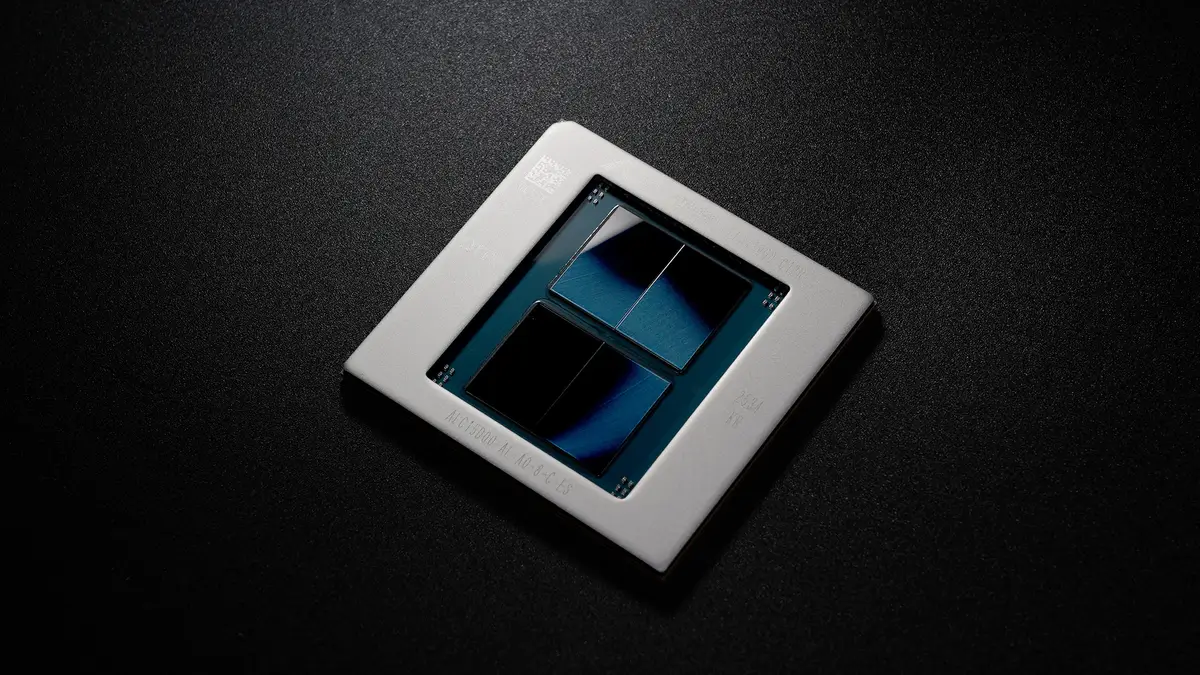
AWS launched Amazon EC2 T9g on 20 November 2026. These are its new burstable instances, built on the Graviton5 processor and replacing T4g as the newest Arm option for small, mostly idle workloads. There's a catch the launch post doesn't mention: per hour, T9g costs about 24% more than T4g. It's priced almost exactly like the Intel-based T3. AWS says you get up to 2.3x the compute, so whether it's "cheaper" depends on whether your app can actually use that extra speed.
This guide covers T9g pricing (pulled from AWS's public price list on 22 November 2026), sizes, regions, how CPU credits work, and a simple way to decide between T9g, T4g and T3.
What is Amazon EC2 T9g?
T9g is AWS's newest burstable general-purpose instance family. "Burstable" means the instance runs at a low baseline CPU level most of the time and can sprint to full speed when needed, paid for with CPU credits. It's built for small websites, development and test servers, microservices, small databases and CI jobs: workloads that sit at 5–20% CPU most of the day.
According to the AWS What's New post, T9g runs on AWS Graviton5 processors and the sixth-generation Nitro cards. Compared with T4g (Graviton2), AWS claims:
- up to 45% better price performance
- up to 2.3x higher compute performance
- 1.5x higher network bandwidth
- 2.8x higher EBS bandwidth
These are AWS's own figures. The T9g product page says they're "based on On-Demand pricing and real-world compute benchmarks in Standard mode." We haven't run benchmarks ourselves, and we hadn't found independent results by publication time.
If you're new to Graviton5, we covered the chip itself in Graviton5 is generally available.
T9g sizes and specs
AWS launched four sizes, all with two vCPUs:
| Size | vCPUs | Memory (GiB) | Baseline per vCPU | CPU credits earned/hour | Network burst | EBS burst |
|---|---|---|---|---|---|---|
| t9g.nano | 2 | 0.5 | 5% | 6 | Up to 7.5 Gbps | Up to 6 Gbps |
| t9g.micro | 2 | 1 | 10% | 12 | Up to 7.5 Gbps | Up to 6 Gbps |
| t9g.small | 2 | 2 | 20% | 24 | Up to 7.5 Gbps | Up to 6 Gbps |
| t9g.medium | 2 | 4 | 20% | 24 | Up to 7.5 Gbps | Up to 6 Gbps |
Source: AWS T9g product page.
Two things stand out. First, the memory and baseline percentages are the same as T4g at every size, so moving over is mostly drop-in. Second, there is no t9g.large, xlarge or 2xlarge yet. If you run t4g.large or bigger, you can't move to T9g at the same size today.
How much does T9g cost? T9g vs T4g vs T3 prices
AWS's announcement gives no hourly prices, so we pulled Linux On-Demand rates for US East (N. Virginia) from AWS's public pricing data on 22 November 2026. Monthly figures are our calculation at 730 hours. They don't include EBS storage, data transfer or extra CPU credit charges.
| Size | T9g (Graviton5) | T4g (Graviton2) | T3 (Intel) | T3a (AMD) |
|---|---|---|---|---|
| nano | $0.00521/h (~$3.80/mo) | $0.0042/h (~$3.07/mo) | $0.0052/h (~$3.80/mo) | $0.0047/h (~$3.43/mo) |
| micro | $0.01042/h (~$7.61/mo) | $0.0084/h (~$6.13/mo) | $0.0104/h (~$7.59/mo) | $0.0094/h (~$6.86/mo) |
| small | $0.02083/h (~$15.21/mo) | $0.0168/h (~$12.26/mo) | $0.0208/h (~$15.18/mo) | $0.0188/h (~$13.72/mo) |
| medium | $0.04166/h (~$30.41/mo) | $0.0336/h (~$24.53/mo) | $0.0416/h (~$30.37/mo) | $0.0376/h (~$27.45/mo) |
The same gap shows up outside the US. In Frankfurt, t9g.micro is $0.0119/h against $0.0096/h for t4g.micro. In Tokyo, it's $0.01339/h against $0.0108/h. That's about 24% more in both regions.
What this means: T9g is the faster chip, but it is not the cheapest burstable instance per hour. T4g still is. AWS's "45% better price performance" claim divides performance by price. If your instance spends most of the day idle at baseline, as many small T-family servers do, you pay the higher hourly rate and the extra speed goes unused.
Unlimited mode costs more too
T9g instances launch in Unlimited mode by default, according to AWS. In Unlimited mode, if you use more CPU than your credits cover over 24 hours, you pay for the extra. AWS's On-Demand pricing page lists the Linux rate as:
| Family | Extra CPU credits (Linux), per vCPU-hour |
|---|---|
| T9g | $0.0496 |
| T4g | $0.04 |
| T2 / T3 | $0.05 |
If you'd rather have a hard ceiling than a surprise charge, switch the instance to Standard mode. Account-level guardrails help too. See our guide to AWS spend limits and SMS alerts.
Is T9g included in the AWS Free Tier?
AWS says t9g.micro and t9g.small are "available under the AWS Free Tier." For accounts on the current credit-based Free Tier, that means you can run them and the cost comes out of your credits. AWS's Free Tier page says new accounts get $100 in credits up front and can earn up to $100 more. A free-plan account closes after six months or when the credits run out, whichever comes first. We explained how that works in AWS Free Tier 2026 explained.
Separately, the long-running T4g free trial, which gives up to 750 hours a month of t4g.small, is still listed on the T4g page as running "until Dec 31st 2026." AWS hasn't said whether it will be extended or replaced with a T9g trial. If you rely on it, plan for 1 January.
Which regions have T9g?
At launch, AWS lists 12 regions:
- US: East (N. Virginia), East (Ohio), West (N. California), West (Oregon)
- Canada: Central
- South America: São Paulo
- Europe: Frankfurt, Spain
- Asia Pacific: Malaysia, Singapore, Sydney, Tokyo
Not on the list yet: Ireland, London, Paris, Stockholm, Mumbai, Seoul and others. T4g is still the Graviton burstable option there.
T9g vs T4g vs T3: which should you pick?
Here's a simple decision table based on AWS's specs and the prices above. "Probably" is deliberate: run your own load test before moving production.
| Your situation | Pick | Why |
|---|---|---|
| Server is idle most of the day, never bursts much | T4g | Same memory and baseline, ~24% cheaper per hour |
| Bursts often (builds, cron jobs, traffic spikes) and runs out of credits | T9g | Up to 2.3x compute (AWS figure), so bursts finish sooner |
| On T3/T3a today, app runs on Arm (Node, Python, Java, Go, containers with arm64 images) | T9g | Roughly the same price as T3, newer CPU |
| App needs x86 (Windows, x86-only binaries or images) | T3 / T3a | T9g is Arm-only |
| Need 8 GiB+ on a burstable instance | T4g / T3 | T9g stops at medium (4 GiB) for now |
| Region not on the T9g list | T4g | T9g not available yet |
| Running the free t4g.small trial | Stay until late December | Trial runs until 31 Dec 2026 per AWS |
How to move from T4g to T9g
The switch is mostly an instance-type change, because both are Arm64 and share the same credit model. A safe order:
- Check the region is one of the 12 above.
- Check your AMI. Most current arm64 AMIs, such as Amazon Linux 2023 and Ubuntu 24.04, should boot. Confirm on a test instance first.
- Snapshot the EBS volume or take an AMI before changing anything.
- Stop the instance, change the instance type to the matching t9g size, then start it.
- Check the credit mode. T9g defaults to Unlimited. Set Standard if you want no extra charges.
- Watch CPUCreditBalance and CPUSurplusCreditBalance in CloudWatch for a week. Then compare total cost with your old T4g bill.
For Auto Scaling groups, update the launch template and run an instance refresh instead of changing instances by hand.
What are developers saying?
We searched Reddit, Hacker News and developer forums for reactions to T9g and found no substantial discussion yet, which isn't surprising for a launch from two days ago. The questions people usually ask about a new T family, and which we've tried to answer above, are:
- Is it cheaper than T4g? (Per hour: no, about 24% more.)
- Is t9g.micro in the free tier? (AWS says yes, under the credit-based Free Tier.)
- Is there a t9g.large? (Not at launch.)
- Does the T4g free trial end? (AWS's page still says 31 December 2026.)
We'll add real reactions with links once there are some.
Editor's take
T9g is a good upgrade with a pricing surprise. AWS put most of Graviton5's gains into speed rather than a lower hourly price. That makes T9g a clear win for anyone moving off Intel T3 (same price, newer chip) and for busy burstable servers that keep running out of credits. For the "set it and forget it" t4g.micro running a small blog or a bastion host, T4g is still cheaper, and nothing forces you to move. Keep an eye on 31 December, when the T4g free trial is due to end.
FAQ
What is AWS T9g?
T9g is AWS's newest burstable EC2 instance family, launched on 20 November 2026 and powered by Graviton5 Arm processors. It comes in nano, micro, small and medium sizes.
Is T9g cheaper than T4g?
No, not per hour. In US East (N. Virginia), t9g.micro is $0.01042/hour against $0.0084 for t4g.micro, about 24% more. AWS says T9g gives up to 45% better price performance because it's faster.
T9g vs T3: which is cheaper?
They cost almost the same. t9g.micro is $0.01042/hour and t3.micro is $0.0104/hour in US East (N. Virginia). T9g needs Arm64 software. T3 is x86.
Is t9g.micro free tier eligible?
AWS says t9g.micro and t9g.small are available under the AWS Free Tier. On today's credit-based Free Tier, the usage is paid from your Free Tier credits.
When does the t4g.small free trial end?
AWS's T4g page says the free trial of up to 750 hours a month of t4g.small runs "until Dec 31st 2026."
Does T9g come in large or xlarge sizes?
Not at launch. AWS lists only nano, micro, small and medium, all with two vCPUs and up to 4 GiB of memory.
Which regions support T9g?
At launch: N. Virginia, Ohio, N. California, Oregon, Canada Central, São Paulo, Frankfurt, Spain, Malaysia, Singapore, Sydney and Tokyo.
Do T9g instances use CPU credits?
Yes. They use the same CPU credit model as T4g, with Standard and Unlimited modes. They launch in Unlimited mode by default, and extra credits cost $0.0496 per vCPU-hour on Linux.
Related today: if you run DynamoDB, see our explainer on AWS Backup incremental backups for DynamoDB, which AWS launched the same day.
Sources
- AWS What's New: Introducing Amazon EC2 T9g instances based on Graviton5 (20 Nov 2026)
- AWS: Amazon EC2 T9g instances product page
- AWS: Amazon EC2 On-Demand pricing (CPU credit rates; hourly instance prices taken from AWS's public pricing data feed for that page, 22 Nov 2026)
- AWS: Amazon EC2 T4g instances (free trial end date)
- AWS: AWS Free Tier
Featured image: the AWS Graviton5 processor, official Amazon press image. Source