Amazon's 65% carbon intensity goal and $7 billion India renewables plan, explained
Amazon aims to cut electricity carbon intensity 65% by 2030 vs 2019 and adds $7bn for India renewables. What it measures, 2025 emissions, caveats.
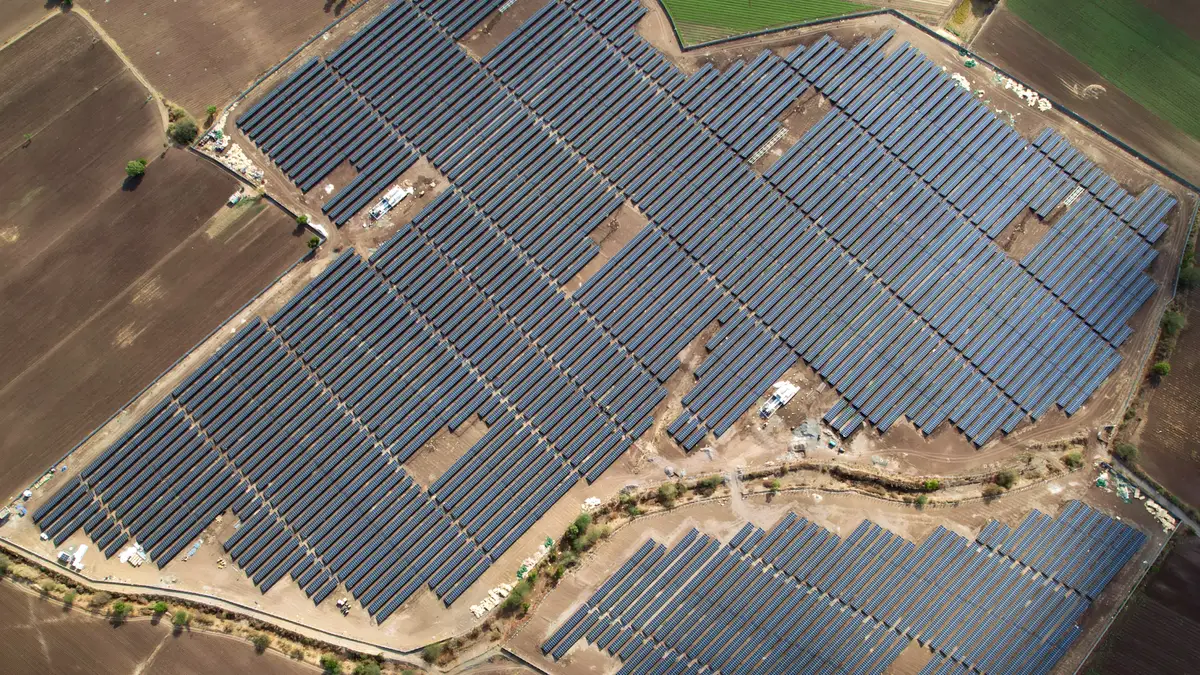
On 17 November 2026, Amazon set a new climate target: by 2030, it aims to cut the carbon intensity of the electricity used across its global operations by 65%, compared with 2019. The same day, it said it will invest $7 billion more in renewable energy in India by 2030. The catch is that this is an intensity goal (emissions per megawatt-hour of electricity), not a promise to cut total emissions. And Amazon's total emissions rose 16% in 2025.
Here's what the goal measures, how it fits with Amazon's other climate promises, what the India money buys, and the questions worth asking.
Also on 9to5Amazon today: The Odyssey is out on Prime Video: price, 4K Blu-ray and Peacock date.
What is Amazon's new carbon intensity goal?
In a post by Chief Sustainability Officer Kara Hurst, Amazon says it will reduce the carbon intensity of the electricity its global operations consume by 65% by 2030 against a 2019 baseline. The key details:
- What it measures: carbon dioxide equivalent (CO₂e) emitted per megawatt-hour (MWh) of electricity Amazon uses.
- How the number was chosen: Amazon says it is based on the International Energy Agency's Net Zero by 2050 pathway.
- Who reviewed it: Amazon names Dr. Joe DeCarolis and Dr. Costa Samaras (Carnegie Mellon), Dr. Jeremy Gregory (MIT Climate and Sustainability Consortium) and Dr. Wenjuan Liu (RMI).
- Reporting: progress will be published every year in Amazon's Sustainability Report.
Hurst's framing: "we believe growing our business and cutting emissions can, and must, go hand in hand," and "carbon intensity is one of the clearest ways to show that."
Amazon did not publish the 2019 baseline value, its current value, or the 2030 target value in grams per MWh. Until it does, outsiders can't check how far along it already is.
Carbon intensity vs total emissions: what's the difference?
This is the most important point for understanding the announcement.
- Absolute (total) emissions = all the CO₂e a company emits in a year.
- Electricity carbon intensity = emissions from electricity divided by the amount of electricity used.
Intensity can fall while total emissions rise, if the company uses a lot more electricity. A purely illustrative example (our arithmetic, not Amazon data):
| Scenario | Electricity used vs 2019 | Intensity vs 2019 | Electricity emissions vs 2019 |
|---|---|---|---|
| Use stays flat | 1× | −65% | 35% of 2019 level |
| Use doubles | 2× | −65% | 70% of 2019 level |
| Use triples | 3× | −65% | 105% of 2019 level |
So the goal guarantees a cleaner supply of electricity, but not lower electricity emissions overall. That depends on how fast Amazon's power demand grows. Amazon itself says demand is rising "across the technology sector, driven by cloud computing and AI."
Don't confuse this with Amazon's older intensity metric either. Amazon's sustainability reports have long tracked carbon intensity per dollar of revenue (grams of CO₂e per $). The new goal covers electricity only, per MWh. They're different numbers.
How does this fit with Amazon's other climate goals?
| Commitment | Target | Status Amazon reports |
|---|---|---|
| The Climate Pledge (co-founded 2019) | Net-zero carbon by 2040 | Ongoing; total emissions rose in 2025 |
| Renewable electricity matching | Match 100% of electricity with renewables | Achieved for a third straight year in 2025 (annual global matching) |
| New: electricity carbon intensity | −65% per MWh by 2030 vs 2019 | Baseline and current value not disclosed |
| Advanced nuclear with X-energy | More than 5 GW in the US by 2039 | Projects in development |
| India renewables | $7 billion more by 2030 | Announced 17 November 2026 |
One way to read the new goal: "100% matched" is an accounting claim. Renewable matching of this kind generally means buying enough renewable energy over a year to equal consumption, not that every site runs on renewables every hour; Amazon publishes a separate renewable energy methodology document explaining its calculation. An intensity target per MWh moves the focus toward how clean the electricity actually is, though Amazon hasn't published the method (for example, whether it uses location-based or market-based accounting). We'd want to see that before judging how strict the target is. For background on the nuclear part, see our explainer on Amazon's X-energy Xe-100 reactors.
Why now? Amazon's emissions rose in 2025
Amazon's 2025 Sustainability Report, published 1 July 2026, showed a rise in absolute emissions. Amazon's own summary says "absolute carbon emissions increased" while overall carbon intensity was down 38% since 2019 and revenue up 156%. Independent coverage put numbers on it:
- Total emissions: about 80.8–81 million metric tons CO₂e in 2025, up 16% from 69.5 million in 2024 (Semafor; Bloomberg via Transport Topics). Bloomberg reported that emissions are up 58% from 2019.
- Purchased electricity: emissions rose 34% year over year (Semafor; Bloomberg).
- Supply chain: up 20%, about three-quarters of the total (Semafor).
- Intensity per dollar of revenue: 113 g, up from 109 g in 2024, the first increase since Amazon began tracking it in 2019, according to Semafor.
Bloomberg tied the rise to data-centre construction, purchased electricity, delivery fuel and more package deliveries. Hurst told Semafor in July: "This isn't going to be linear. It's not going to be a one-year story," and "power availability is a challenge right now." On the 2040 net-zero goal: "2040 is a really ambitious goal, but we are absolutely gunning towards it."
That's the context for the new goal. Electricity is the fastest-growing part of Amazon's footprint, so it's the obvious place for a new target. See also our coverage of Amazon's new data centre in Walla Walla and the AI-driven capex behind Amazon's Q3 2026 results.
What does the $7 billion India investment include?
Amazon says the $7 billion comes on top of $4 billion in renewable energy investments it had already contracted in India. It announced four new utility-scale projects totalling 934 MW:
| Project | State | Capacity |
|---|---|---|
| Wind farm (Amazon's largest wind project contracted in Asia so far) | Karnataka | 234 MW |
| Hybrid solar + wind | Karnataka | 200 MW |
| Solar | Madhya Pradesh | 300 MW |
| Solar | Rajasthan | 200 MW |
Amazon says its India portfolio now includes 14 utility-scale wind and solar projects and 43 on-site solar installations. Once all are operating, they'll have more than 2 GW of capacity, which Amazon says is enough for "more than 3.5 million Indian households." India's Minister for New and Renewable Energy, Pralhad Joshi, is quoted as welcoming "Amazon's continued investment in renewable energy in India." Why India matters for a global target: Amazon says it focuses on countries where new carbon-free energy can most help decarbonise the grid, and India is the country it chose to pair with today's goal.
How big is Amazon's clean-energy portfolio?
On 17 November, Amazon said it has more than 700 carbon-free energy projects worldwide, totalling more than 40 GW: "enough to power more than 12.1 million U.S. homes" once completed. Its tools include power purchase agreements, utility-scale wind and solar, on-site generation, and advanced nuclear and geothermal. It also cites an Oxford Economics study putting the US projects' contribution at $11 billion to GDP and nearly 22,000 jobs (2023–2025).
Checklist: questions to ask when Amazon reports progress
Use this when the next Sustainability Report comes out (mid-2027, if Amazon follows its usual timing):
- Baseline: what was 2019 electricity intensity in g CO₂e/MWh, and what is the 2030 target value?
- Method: is intensity calculated location-based, market-based, or both?
- Scope: does "global operations" include all data centres, including leased and colocation space?
- Total electricity use: how much did consumption grow? (See the illustrative table above.)
- Absolute emissions: did total emissions and electricity emissions fall, or only intensity?
- Hourly matching: any disclosure on how much of its electricity is carbon-free hour by hour, not just over the year?
What are people saying?
So far, reaction is thin. When we searched on publication day, coverage was mostly company-sourced or trade-press rewrites of Amazon's announcement. We found no published independent expert critique of the 65% figure yet, and we couldn't open Reddit threads for this run. The questions readers are searching for, based on Google suggestions, include "Amazon carbon emissions 2025", "Amazon carbon footprint growth" and "how much energy does Amazon use". This article covers the first two. Amazon doesn't break out total electricity consumption in the announcement.
Editor's take
This is a sensible, measurable target aimed at the part of Amazon's footprint that's growing fastest. It's also notable that Amazon says outside academics reviewed it. But it's an intensity goal, announced in a year when absolute emissions rose 16%, without a published baseline number. That's not a reason to dismiss it. It's a reason to watch the next report closely for the baseline, the accounting method and the total-emissions trend. The India money is concrete: four named projects and 934 MW. How Amazon reports progress against the 65% number will tell us more than the announcement does.
FAQ
What is Amazon's 2030 carbon intensity goal?
To cut the carbon intensity of electricity used by its global operations by 65% by 2030 compared with 2019, measured as CO₂e per MWh.
Does Amazon's 65% goal mean emissions will fall 65%?
No. It covers emissions per unit of electricity. If Amazon uses much more electricity, total electricity emissions can fall less, or even rise.
What were Amazon's carbon emissions in 2025?
About 81 million metric tons of CO₂e, up 16% from 2024, according to coverage of Amazon's 2025 Sustainability Report by Bloomberg and Semafor.
Is Amazon powered by 100% renewable energy?
Amazon says it matched 100% of the electricity its global operations used with renewable energy in 2025, for the third year in a row. Matching is an accounting measure: it doesn't mean every site ran on renewable power every hour.
How much is Amazon investing in renewable energy in India?
$7 billion more by 2030, on top of $4 billion already contracted. That includes four new projects totalling 934 MW in Karnataka, Madhya Pradesh and Rajasthan.
What is The Climate Pledge?
A commitment Amazon co-founded in 2019 to reach net-zero carbon emissions by 2040.
How many renewable energy projects does Amazon have?
More than 700 carbon-free energy projects worldwide, with more than 40 GW of capacity, according to Amazon.
Who reviewed Amazon's carbon intensity target?
Amazon names academics from Carnegie Mellon (Joe DeCarolis, Costa Samaras), the MIT Climate and Sustainability Consortium (Jeremy Gregory) and RMI (Wenjuan Liu).
Sources
- About Amazon: Amazon sets goal to cut electricity carbon intensity 65% by 2030. https://www.aboutamazon.com/news/sustainability/amazon-carbon-intensity-goal-electricity-emissions
- About Amazon: Amazon to invest $7 billion in renewable energy in India by 2030. https://www.aboutamazon.com/news/sustainability/amazon-investment-india-renewable-energy
- About Amazon: 2025 Sustainability Report key takeaways. https://www.aboutamazon.com/news/sustainability/amazon-sustainability-report-2025
- Amazon Sustainability: Carbon-free energy. https://sustainability.aboutamazon.com/climate-solutions/carbon-free-energy
- Semafor: Amazon's rising carbon footprint "not a one-year story," CSO says. https://semafor.com/article/07/01/2026/amazons-rising-carbon-footprint-not-a-one-year-story-cso-says
- Transport Topics (Bloomberg): Amazon emissions rose 16% in 2025. https://www.ttnews.com/articles/amazon-emissions-rise-2025
Featured image: aerial view of a solar farm, published by Amazon with its India renewable energy announcement; Amazon does not name the site. Source